
What Happens In A Cosmo Trial Class: A Minute-By-Minute Look
May 29, 2026
Most parents who book a Cosmo trial class have the same question before the session even starts: What is this actually going to look like?
Is the teacher going to quiz my child? Will it feel like a test? Will my kid freeze up and spend the whole time staring at a stranger on a screen?
Those are completely reasonable things to wonder. So instead of telling you what Cosmo classes are like, we thought it would be more useful to just show you.
Below is a real 4th grade English trial class, broken down minute by minute. The student is a bright, talkative kid — we'll call him Marcus — who's been working on writing. His teacher has seven years of classroom experience and teaches at Cosmo alongside her full-time school position. What happened over those 50 minutes is a pretty accurate picture of what a first Cosmo session looks like, and what sets it apart from what most kids experience in school.
Is the teacher going to quiz my child? Will it feel like a test? Will my kid freeze up and spend the whole time staring at a stranger on a screen?
Those are completely reasonable things to wonder. So instead of telling you what Cosmo classes are like, we thought it would be more useful to just show you.
Below is a real 4th grade English trial class, broken down minute by minute. The student is a bright, talkative kid — we'll call him Marcus — who's been working on writing. His teacher has seven years of classroom experience and teaches at Cosmo alongside her full-time school position. What happened over those 50 minutes is a pretty accurate picture of what a first Cosmo session looks like, and what sets it apart from what most kids experience in school.
The First 5 Minutes: Rapport Before Rules
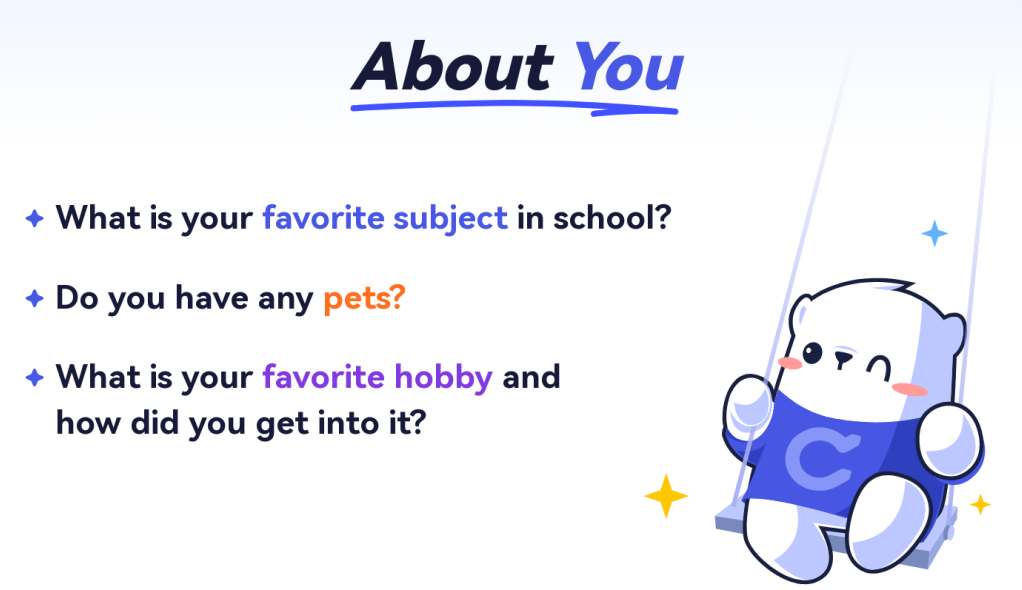
The class opens with introductions — but not the kind you'd expect. The teacher doesn't jump straight into a syllabus or a rules slide. Instead, she tells Marcus a few things about herself: she has dogs, she gardens on weekends, she plays video games. Then she asks him the same question.
He has a cat in China. He used to have a turtle, but his cat figured out how to splash water from the turtle tank to wash her own face, which Marcus finds hilarious. He builds Legos, and is very clear that building is the point, not playing. "Play with them may get boring," he explains, "but building them will never get boring."
"We can work with that," the teacher says. She literally means it. She's filing away the Legos, the science interest, the way he just explained a distinction most 4th graders wouldn't make. That's going to inform how she frames things for the next 50 minutes.
She closes the opening with one ground rule: "If I ever talk too fast or say something that doesn't make sense, interrupt me. There's nothing else to interrupt. The goal is to make sure you understand." Marcus nods. They're ready.
He has a cat in China. He used to have a turtle, but his cat figured out how to splash water from the turtle tank to wash her own face, which Marcus finds hilarious. He builds Legos, and is very clear that building is the point, not playing. "Play with them may get boring," he explains, "but building them will never get boring."
"We can work with that," the teacher says. She literally means it. She's filing away the Legos, the science interest, the way he just explained a distinction most 4th graders wouldn't make. That's going to inform how she frames things for the next 50 minutes.
She closes the opening with one ground rule: "If I ever talk too fast or say something that doesn't make sense, interrupt me. There's nothing else to interrupt. The goal is to make sure you understand." Marcus nods. They're ready.
Minutes 5–10: Your Child's Starting Point (Without Being Defined by a Number)
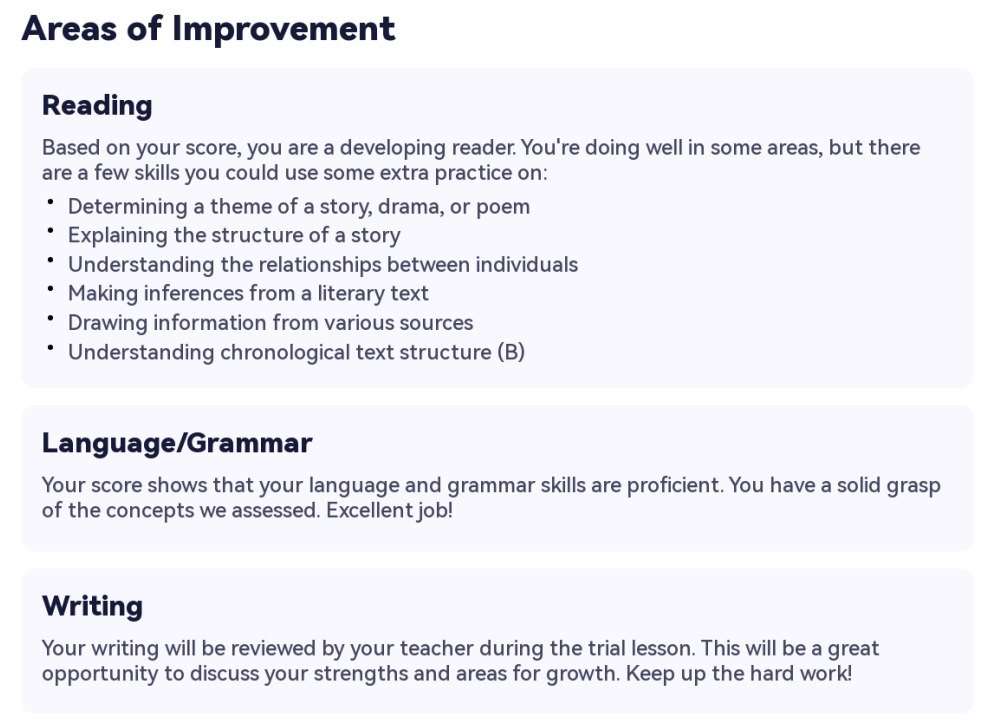
The teacher pulls up Marcus's adaptive assessment report, a diagnostic he took before the trial class. She's careful about how she introduces it.
"This test is a little shorter than a state standardized test," she explains. "So sometimes it can be a slight miscalculation. We'll have you re-take it as classes go on, to show your progress on Cosmo's scale." She's not framing this as a verdict. She's framing it as a starting point.
Then she does something most school teachers don't have time for: she asks what Marcus is working on in class right now. He lights up immediately. Greek myths. His class is reading two stories, a drama, and a reverse poem, and they have to identify the theme of each. The teacher connects to it right away: any time something at school stops making sense, he can bring it to their sessions and she'll add it to his learning plan.
In four minutes, the teacher has learned his interests, understood his school context, and made clear that this class is built around him instead of a fixed curriculum.
"This test is a little shorter than a state standardized test," she explains. "So sometimes it can be a slight miscalculation. We'll have you re-take it as classes go on, to show your progress on Cosmo's scale." She's not framing this as a verdict. She's framing it as a starting point.
Then she does something most school teachers don't have time for: she asks what Marcus is working on in class right now. He lights up immediately. Greek myths. His class is reading two stories, a drama, and a reverse poem, and they have to identify the theme of each. The teacher connects to it right away: any time something at school stops making sense, he can bring it to their sessions and she'll add it to his learning plan.
In four minutes, the teacher has learned his interests, understood his school context, and made clear that this class is built around him instead of a fixed curriculum.
Minutes 10–45: Our Main Lesson on "Opinion Writing Hacks"
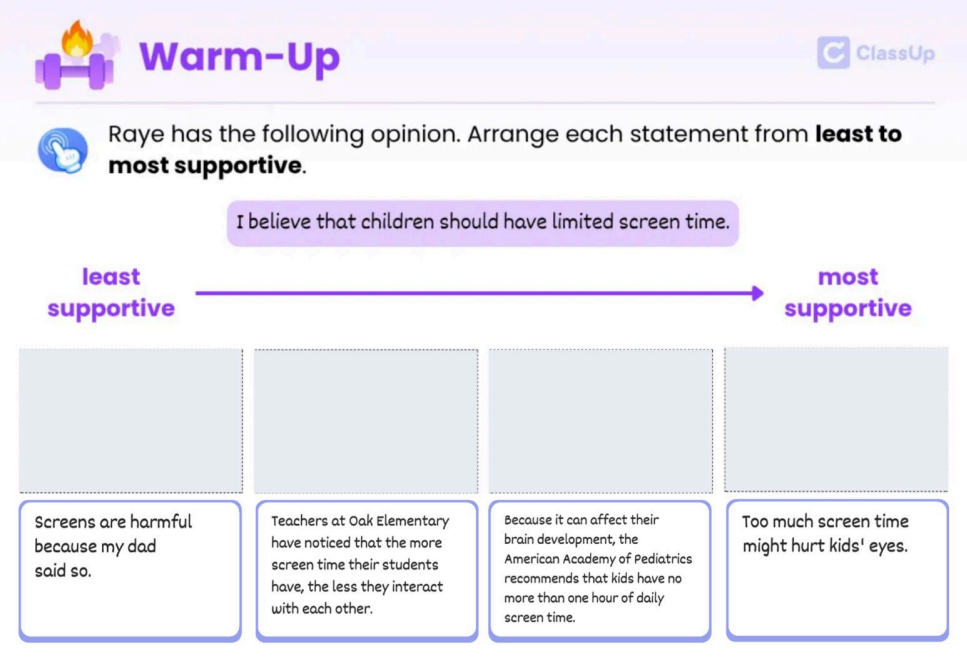
Before the formal lesson begins, the teacher runs a warm-up activity. She shows Marcus four statements about screen time — ranging from "too much screen time might hurt kids' eyes" to a citation from the American Academy of Pediatrics — and asks him to rank them from least to most supportive of the argument that kids should have limited screen time.
He gets the bottom one right without hesitation: "Because my dad said so" isn't evidence. "If your parents say something, it might be true — but it might also just be an opinion," Marcus explains. He's already thinking about what makes a claim credible.
The teacher pushes one step further: even the statement about hurting eyes is weak, she points out, because it says "might" and cites no source. "Harmful in what way? To what?" A vague possibility isn't the same as a pediatric organization making a specific, measurable recommendation.
The lesson hasn't officially started, and Marcus is already thinking like a writer who has to earn the reader's trust.
He gets the bottom one right without hesitation: "Because my dad said so" isn't evidence. "If your parents say something, it might be true — but it might also just be an opinion," Marcus explains. He's already thinking about what makes a claim credible.
The teacher pushes one step further: even the statement about hurting eyes is weak, she points out, because it says "might" and cites no source. "Harmful in what way? To what?" A vague possibility isn't the same as a pediatric organization making a specific, measurable recommendation.
The lesson hasn't officially started, and Marcus is already thinking like a writer who has to earn the reader's trust.
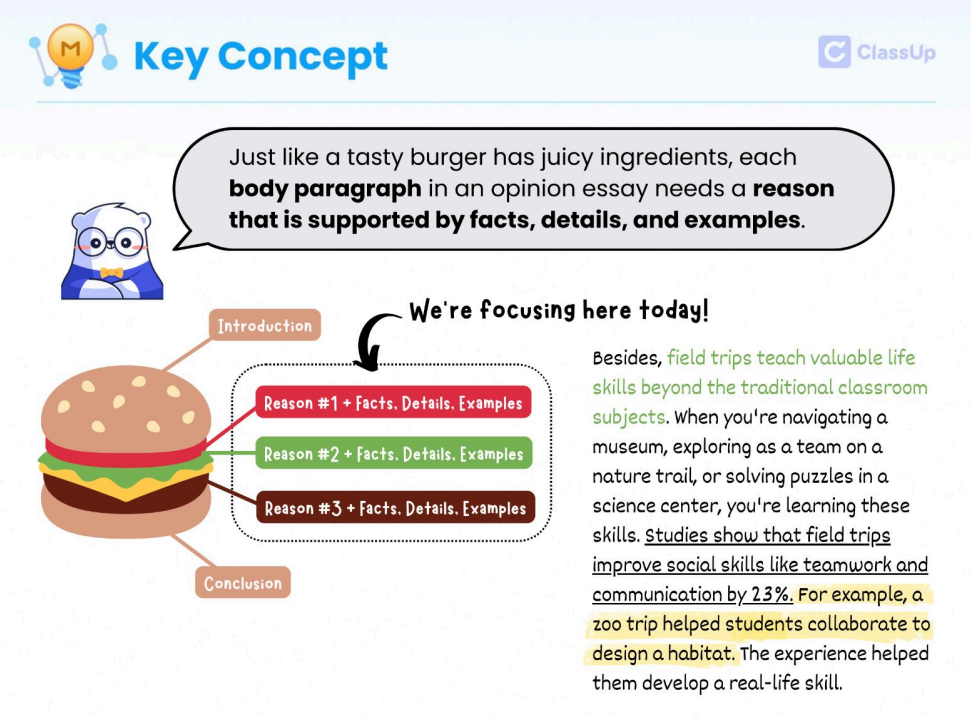
The main lesson teaches opinion writing: specifically, how to support a reason with facts, details, and examples. The teacher introduces the "burger paragraph." Marcus has heard of it, and the sandwich version too. She reviews the three types of support, one at a time.
First: a strong reason, introduced with a linking phrase ("first of all," "besides," "another important aspect"). She shows what it looks like to present two reasons for two different opinions about screen time and models how a full paragraph actually sounds when it's read aloud.
Second: facts. Here, the teacher makes a move that catches Marcus's attention. She shows the difference between citing "studies show" and citing the American Academy of Pediatrics or Stanford University. "If this were a real student paper, I'd ask: what studies? You need to give me a specific one." She also demonstrates how to paraphrase a fact: break the sentence into subject, verb, and object. Reassemble it with different words. Same idea. Your voice.
Third: examples and details. This is where she introduces the question that she'll return to again and again for the rest of the class: "Like what?" Every time a reason is stated, the follow-up is like what. What specific example shows that? What detail makes this concrete instead of general?
"It causes long-lasting sleep deprivation" is more useful than "it hurts sleep." By how much? In what way? Long-lasting sleep deprivation. The specificity is the point.
First: a strong reason, introduced with a linking phrase ("first of all," "besides," "another important aspect"). She shows what it looks like to present two reasons for two different opinions about screen time and models how a full paragraph actually sounds when it's read aloud.
Second: facts. Here, the teacher makes a move that catches Marcus's attention. She shows the difference between citing "studies show" and citing the American Academy of Pediatrics or Stanford University. "If this were a real student paper, I'd ask: what studies? You need to give me a specific one." She also demonstrates how to paraphrase a fact: break the sentence into subject, verb, and object. Reassemble it with different words. Same idea. Your voice.
Third: examples and details. This is where she introduces the question that she'll return to again and again for the rest of the class: "Like what?" Every time a reason is stated, the follow-up is like what. What specific example shows that? What detail makes this concrete instead of general?
"It causes long-lasting sleep deprivation" is more useful than "it hurts sleep." By how much? In what way? Long-lasting sleep deprivation. The specificity is the point.
With the concepts laid out, Marcus is given a rough paragraph — on the topic of whether or not children should have limited screen time — to improve: "First of all, screen time negatively affects social skills. Kids do not talk to people face to face as much, they just stare at their phones."
It's a reasonable first draft. But it doesn't cite anything, the reason is more of a description than a strong claim, and there's no linking word introducing the support. The teacher asks Marcus which piece he wants to tackle first. He chooses to restate a fact they looked at earlier.
Together they work through the paraphrase. The original: "Screen-free camps improve social problem-solving skills by 25% in just one week." The goal: same idea, different words. Marcus rearranges the subject and verb, swaps "25%" for "a quarter," and rewrites the setting. By the end, it's clearly his sentence.
He adds a linking word. Then the teacher asks: does this paragraph need a second reason? He says yes. She asks: "What's another reason kids should have limited screen time?" He answers immediately — it might hurt their eyes. She helps him tighten that into a strong, clear reason statement.
When she asks for an example of how screen time could affect eyes, he hesitates. She prompts him gently. He thinks about weekends, video games, extended hours, and eventually arrives at a specific and unexpectedly precise observation about what prolonged screen exposure actually does. The teacher notes it without making a fuss.
He built that paragraph. She asked the right questions.
It's a reasonable first draft. But it doesn't cite anything, the reason is more of a description than a strong claim, and there's no linking word introducing the support. The teacher asks Marcus which piece he wants to tackle first. He chooses to restate a fact they looked at earlier.
Together they work through the paraphrase. The original: "Screen-free camps improve social problem-solving skills by 25% in just one week." The goal: same idea, different words. Marcus rearranges the subject and verb, swaps "25%" for "a quarter," and rewrites the setting. By the end, it's clearly his sentence.
He adds a linking word. Then the teacher asks: does this paragraph need a second reason? He says yes. She asks: "What's another reason kids should have limited screen time?" He answers immediately — it might hurt their eyes. She helps him tighten that into a strong, clear reason statement.
When she asks for an example of how screen time could affect eyes, he hesitates. She prompts him gently. He thinks about weekends, video games, extended hours, and eventually arrives at a specific and unexpectedly precise observation about what prolonged screen exposure actually does. The teacher notes it without making a fuss.
He built that paragraph. She asked the right questions.
Minutes 45–50: The Part Most Parents Don't Expect
With the trial lesson wrapped, the teacher asks Marcus to pass the device to his mom. What follows is a brief but substantive debrief that most parents don't anticipate on a first call.
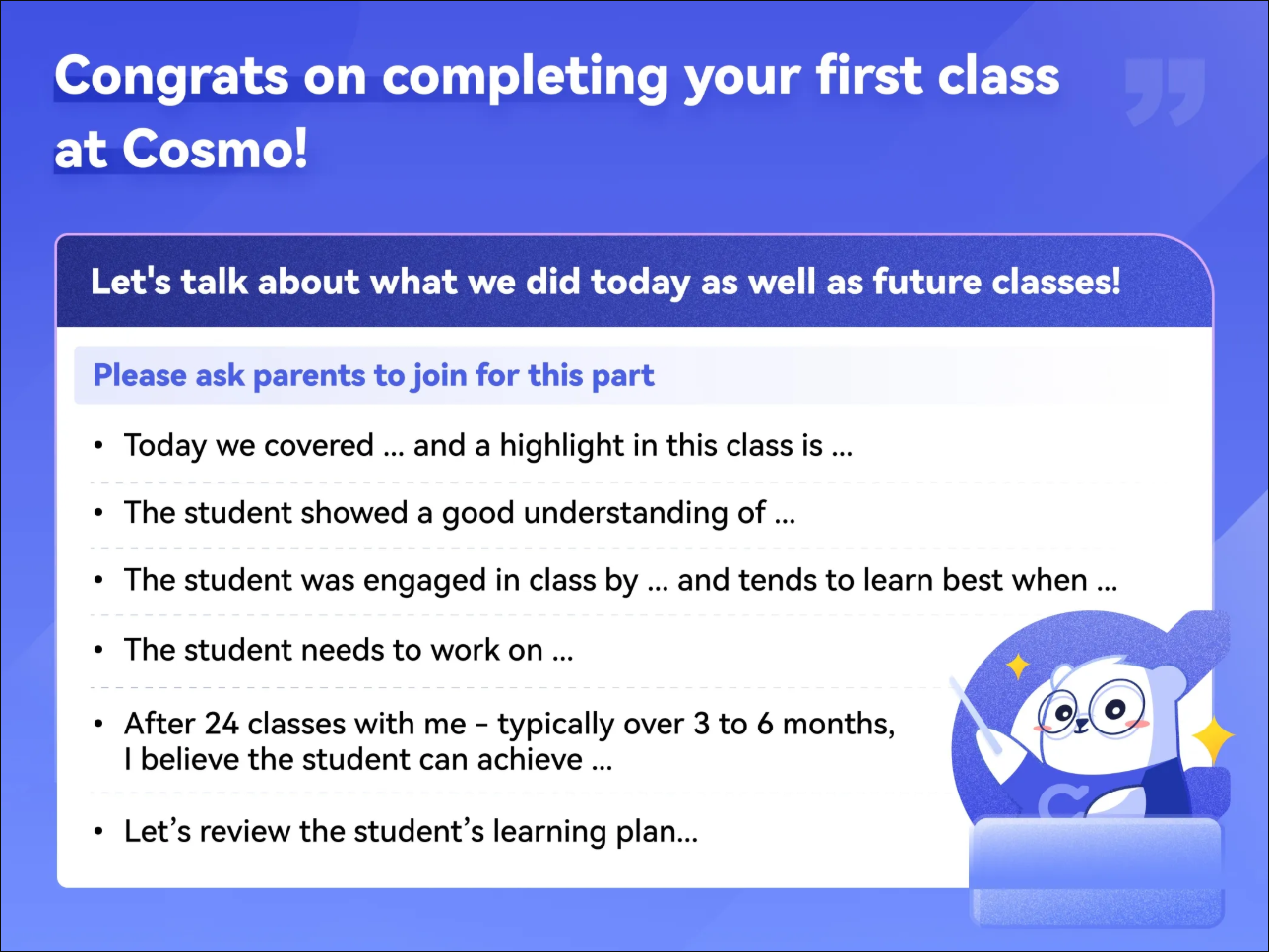
She shares what she observed: "He's a really bright kid. Where I see him struggling is in providing specifics — that's definitely a big focus we can have for him." Then she turns it over. Does mom want the sessions split between reading and writing, or mostly writing?
Mom shares context that shifts the picture: Marcus has had a private English teacher for five years. His grammar is strong. His reading retention is good. In fact, his library teacher said he can recall every detail of a book after he finishes it. But his writing hasn't improved much in those five years, and she doesn't think the instruction has been building the kind of organized, logical structure that English writing actually requires.
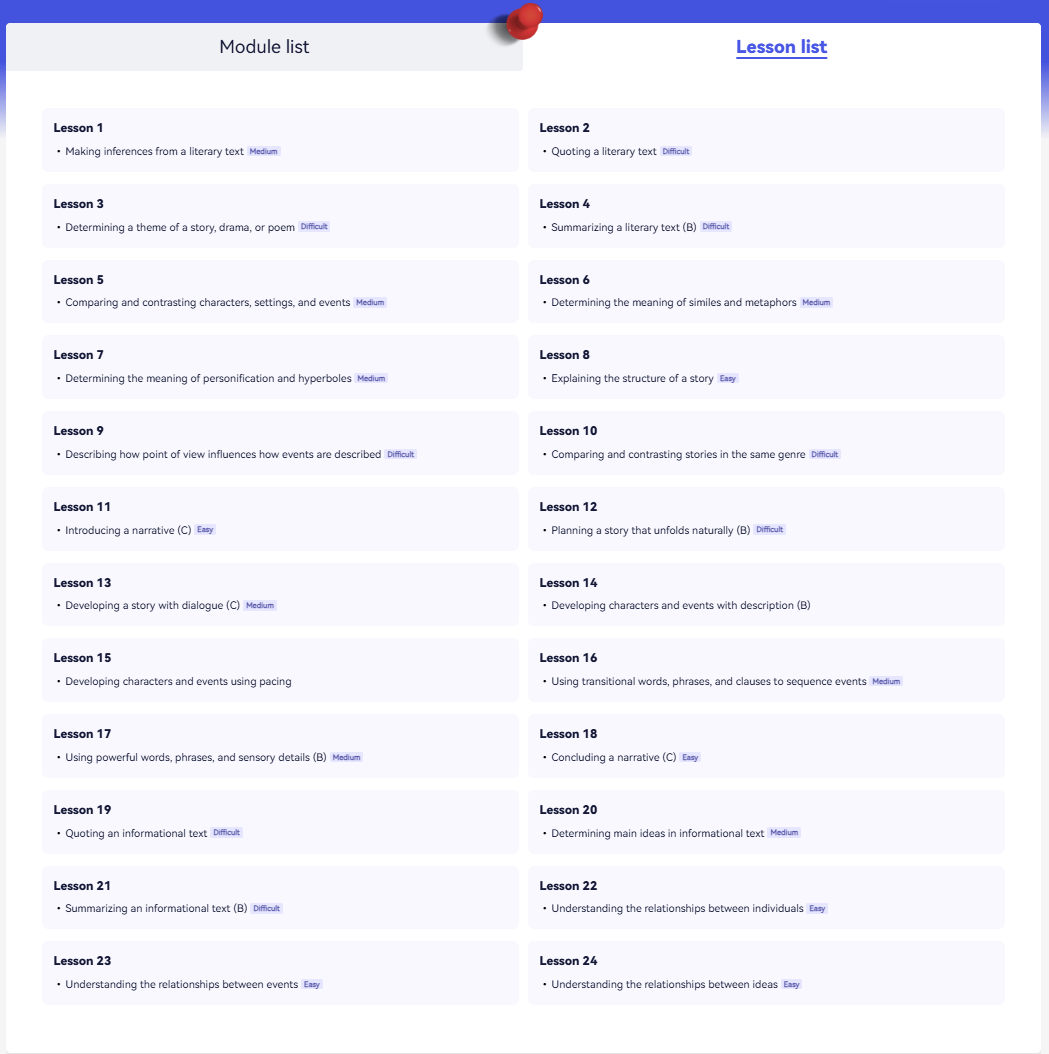
The teacher connects the dots in real time. Strong grammar, good recall, weak organizational output — that's a recognizable pattern when a student's English writing instruction hasn't built the structural scaffolding that written English depends on. Chinese-language literacy instruction tends to be more visually organized by nature; English writing structure is different and has to be explicitly taught. She sketches a plan: visual scaffolding for paragraph organization, consistent practice with the "like what" habit, direct instruction in the structural moves that make English writing legible.
Mom shares context that shifts the picture: Marcus has had a private English teacher for five years. His grammar is strong. His reading retention is good. In fact, his library teacher said he can recall every detail of a book after he finishes it. But his writing hasn't improved much in those five years, and she doesn't think the instruction has been building the kind of organized, logical structure that English writing actually requires.
The teacher connects the dots in real time. Strong grammar, good recall, weak organizational output — that's a recognizable pattern when a student's English writing instruction hasn't built the structural scaffolding that written English depends on. Chinese-language literacy instruction tends to be more visually organized by nature; English writing structure is different and has to be explicitly taught. She sketches a plan: visual scaffolding for paragraph organization, consistent practice with the "like what" habit, direct instruction in the structural moves that make English writing legible.
Marcus weighs in on the plan too: both reading and writing, but mostly writing. The learning plan is updated before the call ends.
What a Trial Class Actually Is
A lot of families walk into a Cosmo trial session expecting something that feels like a demo — the teacher performing, the student watching, the parent evaluating from the sidelines. What typically happens is different.
The trial class is the first real session. The teacher is already assessing, already adjusting, already building the relationship that will make the next class more productive than this one. By the time the parent debrief started in this session, the teacher already knew: • Marcus processes structure better when it's made visual. • He responds well to having the "why" explained before the "what." • His conversational reasoning is well ahead of his written output. • His family's priority is writing, with reading mixed in. She didn't know any of that an hour ago. That's what a trial class is for. Not to sell you on Cosmo. To find out what your child actually needs.
The trial class is the first real session. The teacher is already assessing, already adjusting, already building the relationship that will make the next class more productive than this one. By the time the parent debrief started in this session, the teacher already knew: • Marcus processes structure better when it's made visual. • He responds well to having the "why" explained before the "what." • His conversational reasoning is well ahead of his written output. • His family's priority is writing, with reading mixed in. She didn't know any of that an hour ago. That's what a trial class is for. Not to sell you on Cosmo. To find out what your child actually needs.
How Cosmo Can Help
If you've been trying to figure out whether your child needs extra support, sometimes the clearest answer comes from 50 minutes with the right teacher. Cosmo offers a free first class — no commitment, no pressure, just a real picture of where your child is. Try a free class →